


Context
This case study began as a UX research project for Concepts, Measures, and Methods course at the University of Twente. It investigated the challenges faced by early-career UI/UX designers when trying to break into the industry. The findings would later lay the groundwork for Palaestra: a collaborative product design challenge platform.
Research approach
The research project aims to answer two questions:
- What problems and challenges are UI/UX designers facing when starting their career?
- How might an online platform support novice designers in starting their career?
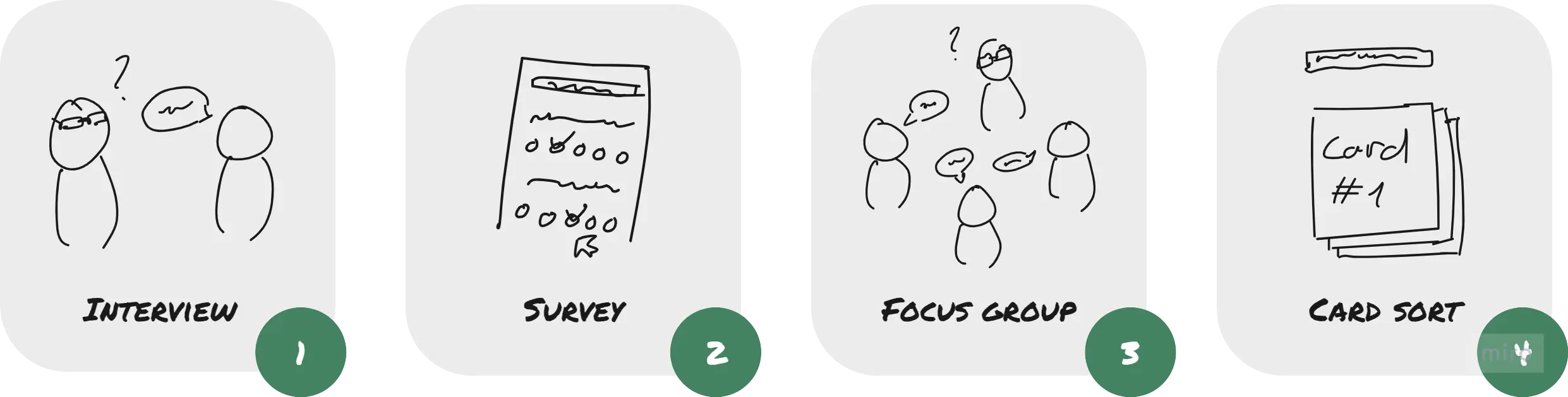
Four research activities - interviews, survey, focus group, and card-sorting - were conducted to answer these questions, aiming to triangulate the results.
Key insights
Three core themes were identified regarding the problems and challenges of novice UI/UX designers:
1. Building a portfolio stands as the most significant hurdle
…I don't know what to showcase. Does the person who want to see the portfolio, do they like just images or do they like videos?…
- J, an HCI Master’s student with no experience in UX/UI design.
The interviews revealed clear patterns: beginners struggle to find viable project ideas, understand employer expectations for case studies, and figure out the best formats for presenting their work. These insights were strongly echoed by other designers during the focus group.
This qualitative feedback was further backed by the survey data. Half of the respondents rated "showcasing portfolio projects" as very or extremely difficult, while another 2 out of 6 reported "building portfolio projects" as very difficult.
2. Developing a comprehensive skillset is challenging
Interview and focus group attendees reported challenges in growing a broad range of skills - from prototyping, user research, to soft skills and overall command of the design process. Survey pinpointed visual design as the most difficult skill to master.
To advance their skillset, learners mostly utilized free online resources, most prominently YouTube. However, some participants mentioned navigating the sheer amount of resources a challenge.
3. Accessing community proves essential but difficult
Community is a critical resource. Interviewees relied heavily on their networks for design feedback and industry insights; and all survey respondents rated friends and connections as moderately useful or higher. However, many respondents found recruiting project collaborators and user research participants difficult. Regarding how this isolation impacts skill development, a focus group member reflected:
We lack collaboration skills when we are working as a beginner because maybe we just worked on […] a personal project that didn't have teams like maybe developer, PM or business team.
From insights to initial concepts for an online platform
- After discussing the challenges, the focus group brainstormed 17 platform ideas. These clustered into four areas: Portfolio Building, Community, Basic Resources, and Hands-on Practice.
- Then, I conducted two sessions to understand how potential users would naturally organize these features.
Competitor analysis
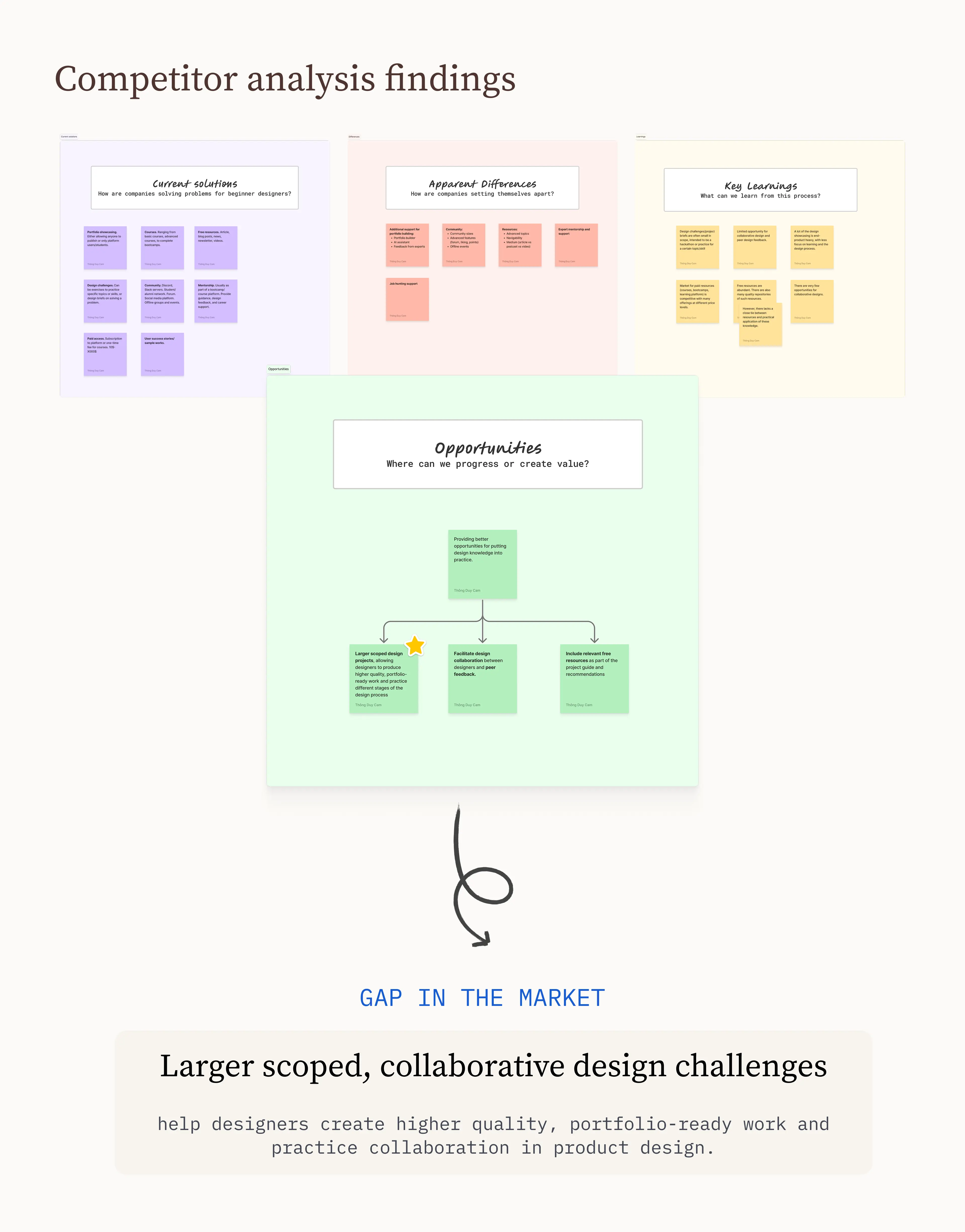
I analyzed 14 different platform targeting UI/UX designers, comparing them on 3 key themes discussed previously: portfolio building, skill development, and community engagement.
Results and opportunities for differentiation
Many platforms addressed the themes discussed above, with UXcel emerged as the closest direct competitor. However, I identified a key opportunity for differentiation:
Larger scoped design projects, allowing designers to produce higher quality, portfolio-ready work and practice different stages of the design process.
Feature planning and prioritization
Based on competitor gaps and the differentiation strategy, I selected the most relevant features from the focus group ideation. I then detailed their requirements and mapped them onto a prioritization matrix.
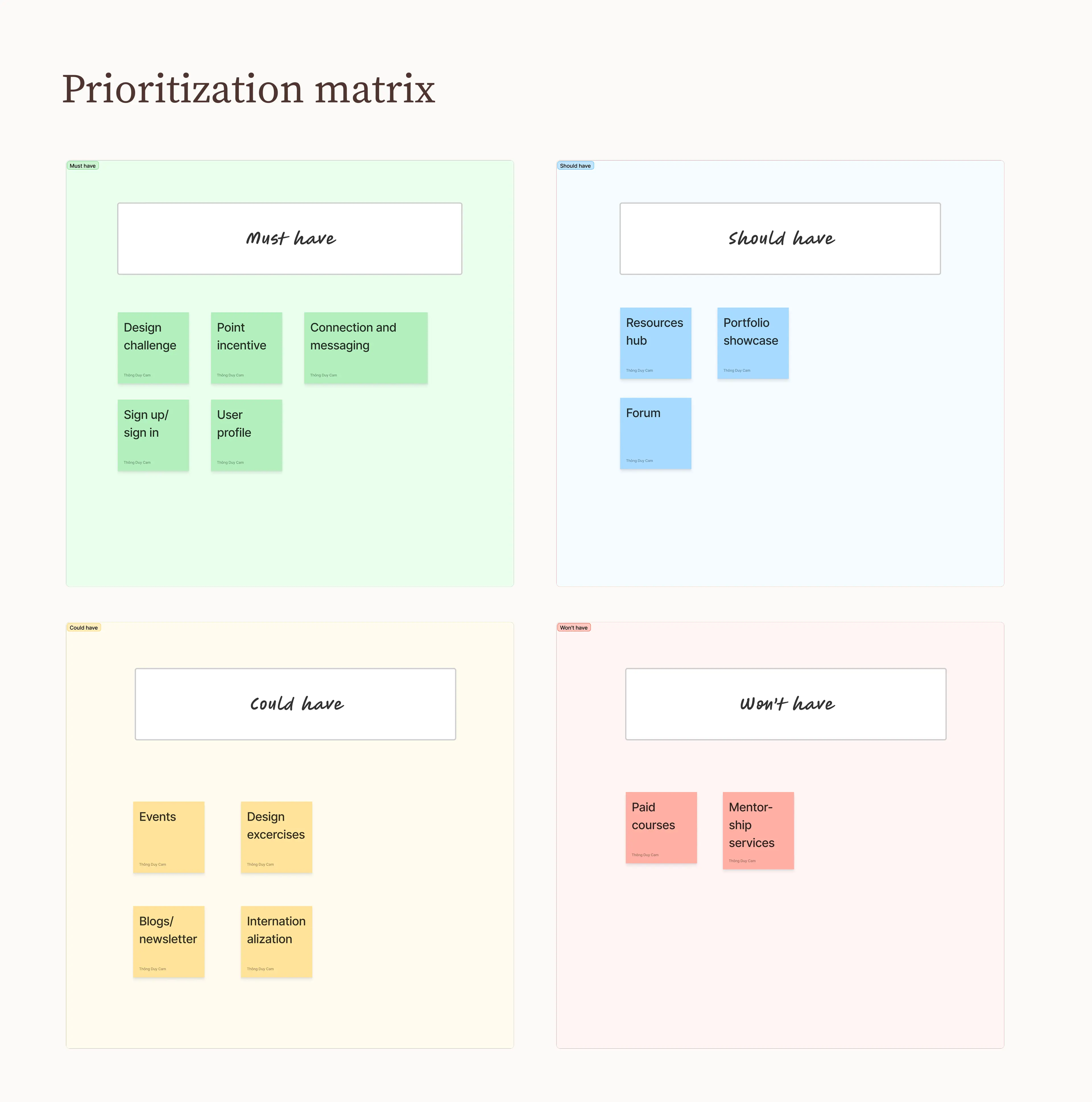
This resulted in a clear "Must-Have" list for the Minimum Viable Product (MVP):
- Design Challenges
- Connecting & Messaging
- Point Incentives
- Core Infrastructure (User Profile, Sign up/Sign in)
Information architecture
With the requirements in place, I defined the platform’s information architecture. I identified what information to show when users are logged in versus not.
Low-fidelity sketches
From the information architecture, I sketched the pages and their variants. Sketching allowed me to quickly try out different ideas for layout and UI without worrying about minute design details.
Designing the brand
I started the branding process by building a mood board to explore tones, colors, typography, and illustrations. Next, I established the platform's core concept: Palaestra. Named after ancient Greek wrestling schools, it serves as a fitting metaphor for product designers sparring and sharpening their skills.
I then translated the mood board and concept into a concrete visual identity. Brown was chosen as the primary color to evoke a friendly, craft-driven feel and allow the users' design work to take center stage. For typography, I chose Source Serif Pro for headings to convey sophistication and craftsmanship, paired with Inter as a universal body font.
Design System: Building on top of Untitled UI
Instead of building a design system from scratch, I used Untitled UI, customizing tokens and assets to match the visual identity.
Final designs
With the design system ready, I started to turning my sketches into high-fidelity designs.
Home
On the home page, users can see the ongoing design challenge, latest updates, their profile and statistics. There is also a quick link to continue with their submission if they are working on one.
Design Challenges
Users can see the current and some past challenges. Submission and team information is displayed on the right column if available.
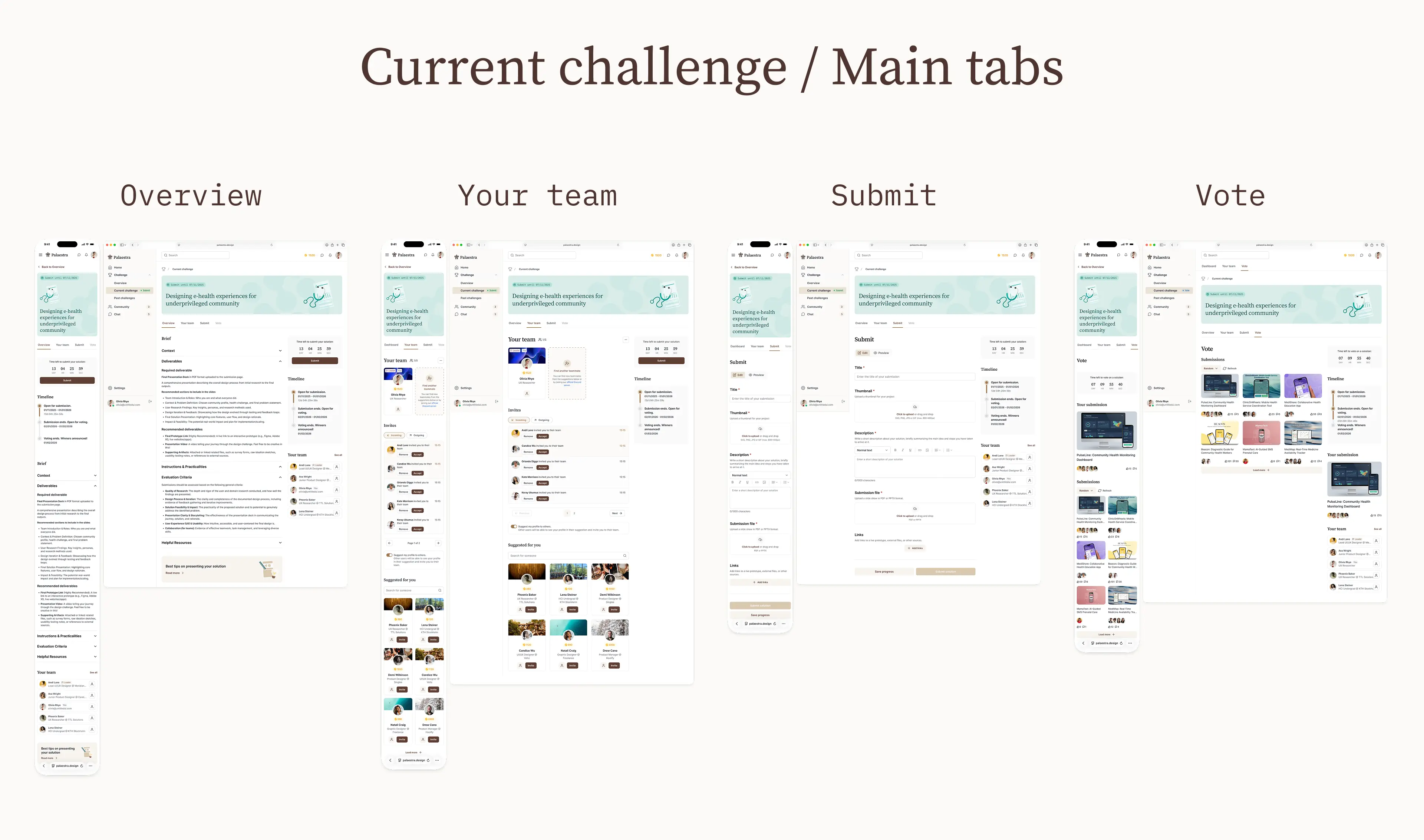
Current Challenge
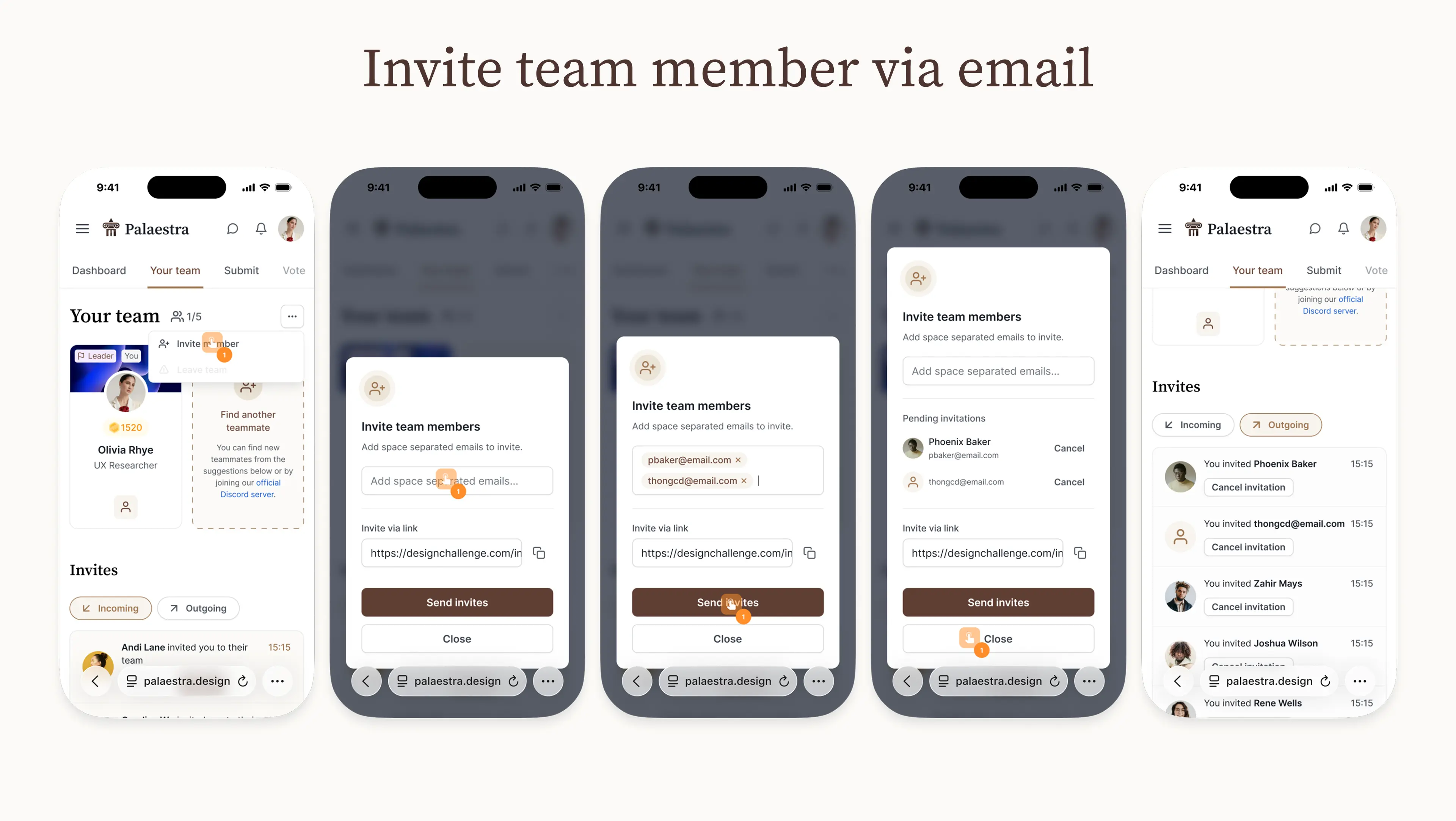
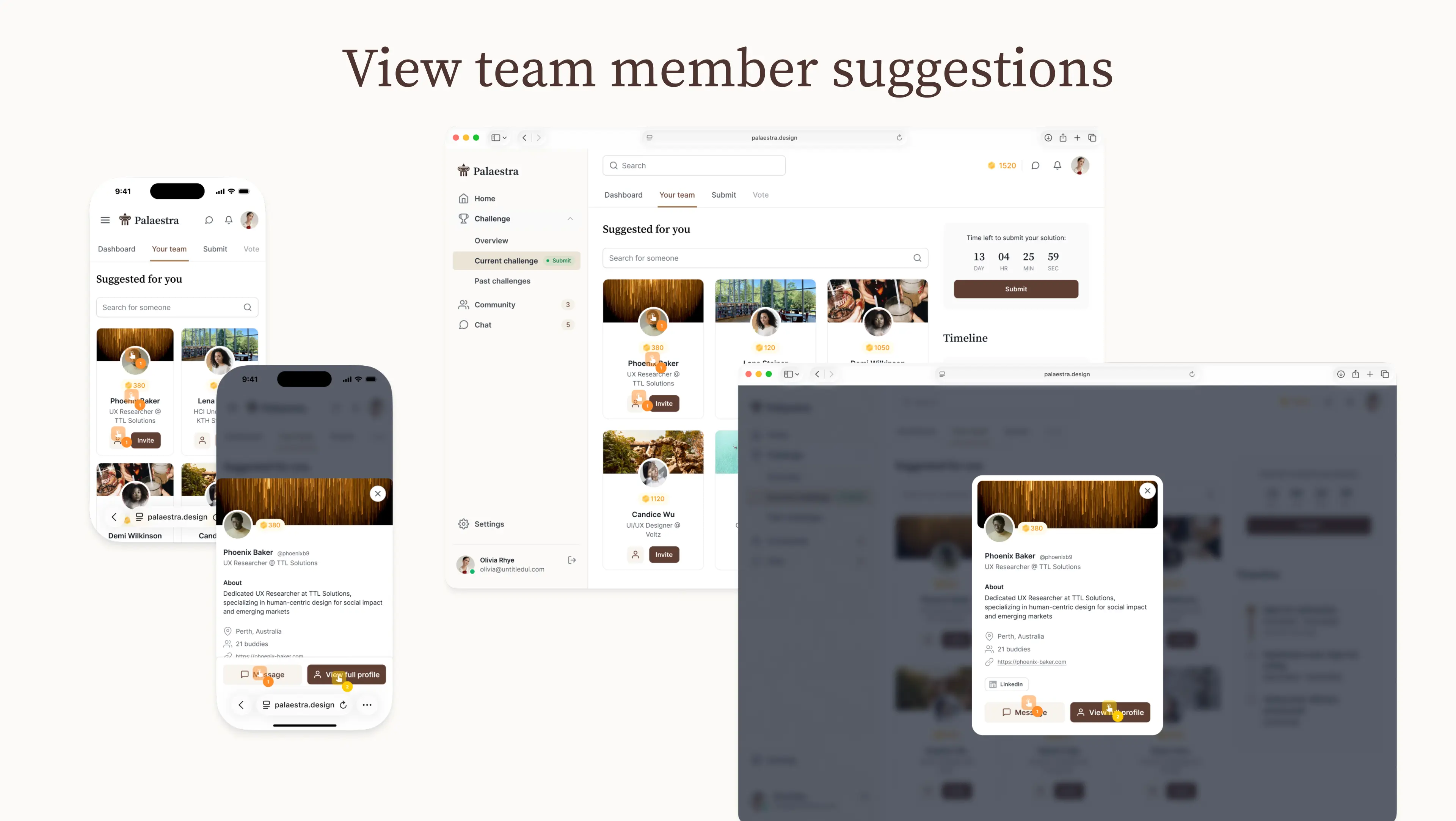
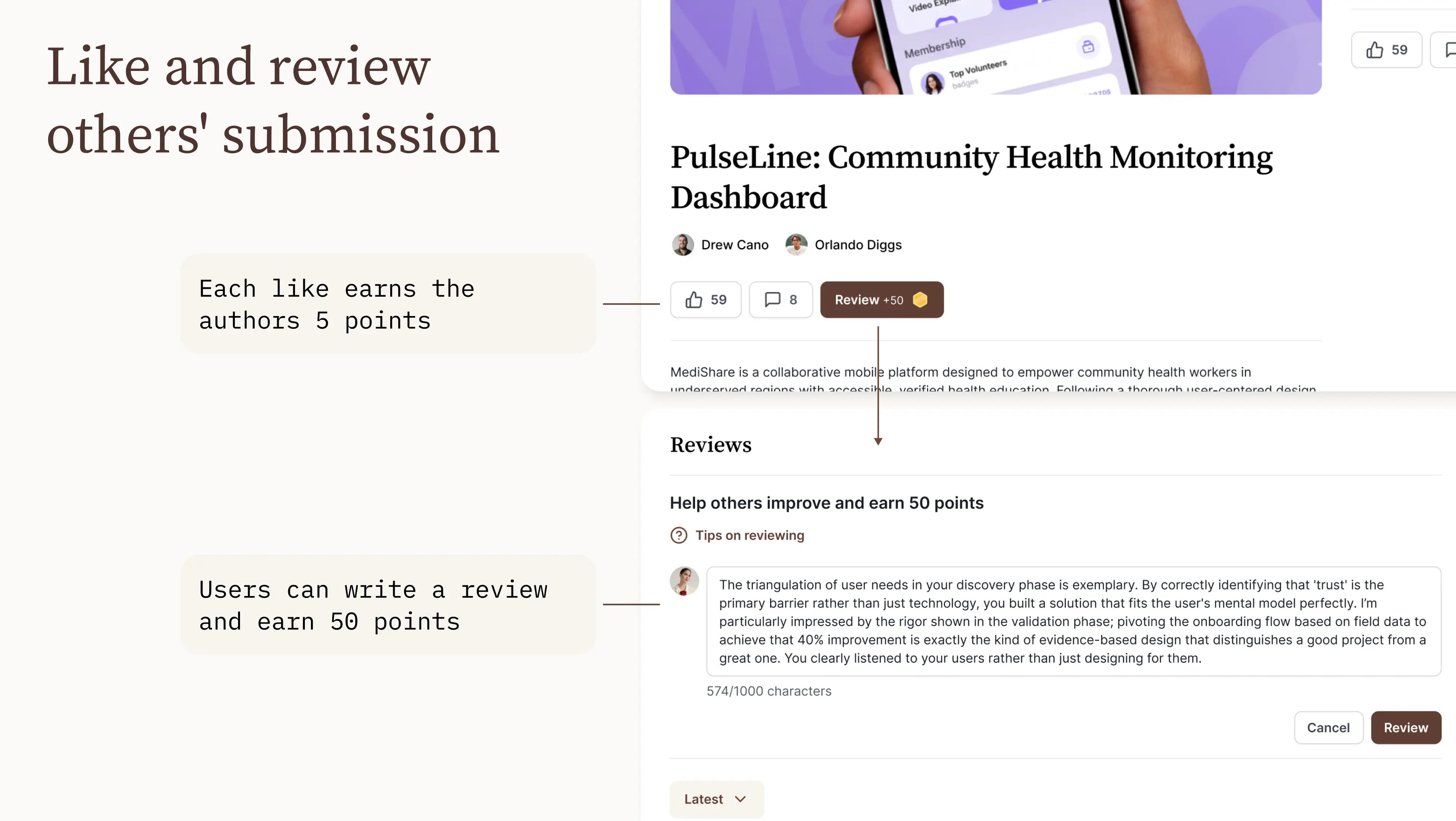
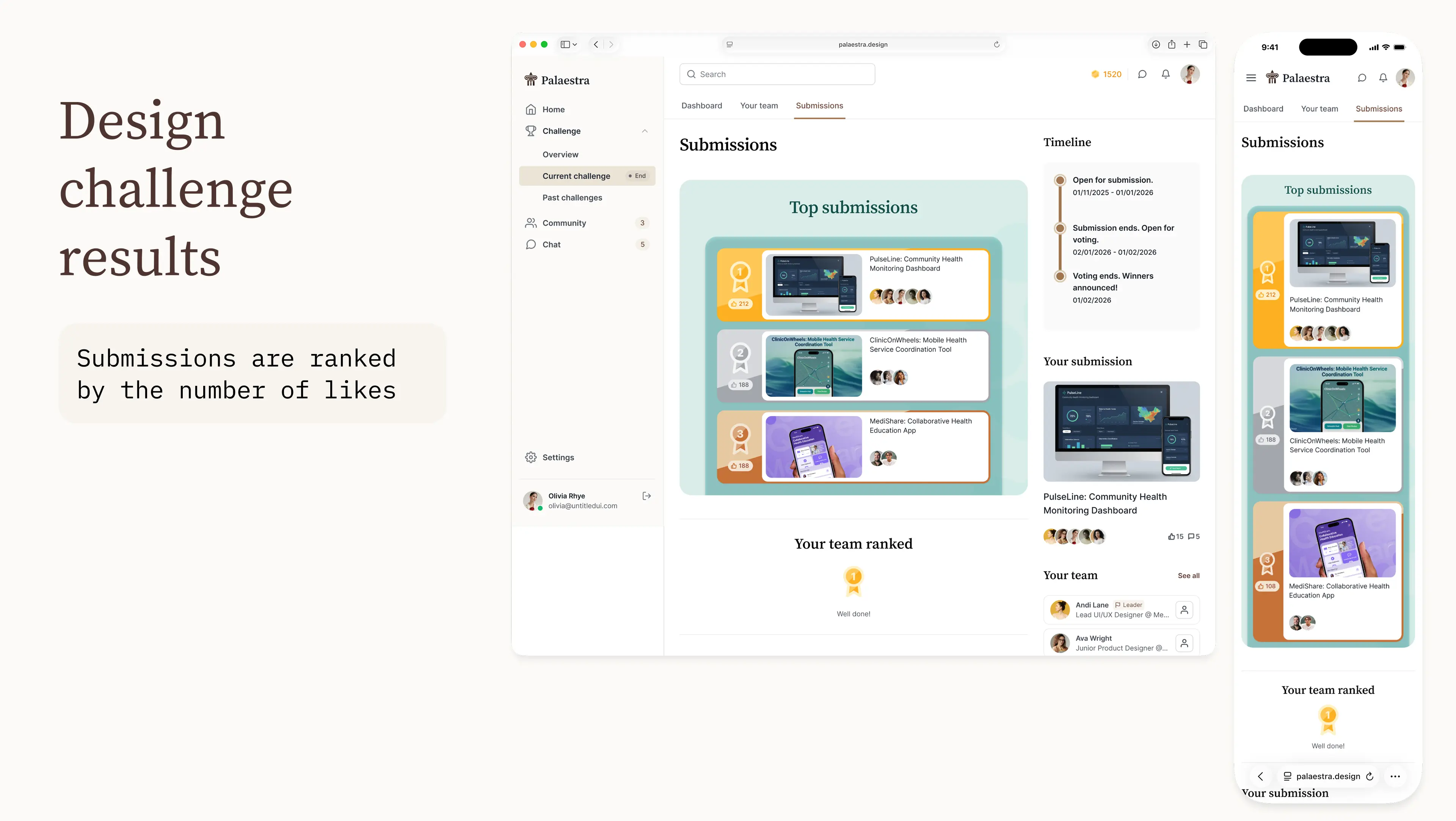
UI changes according to the different phases of the design challenge.
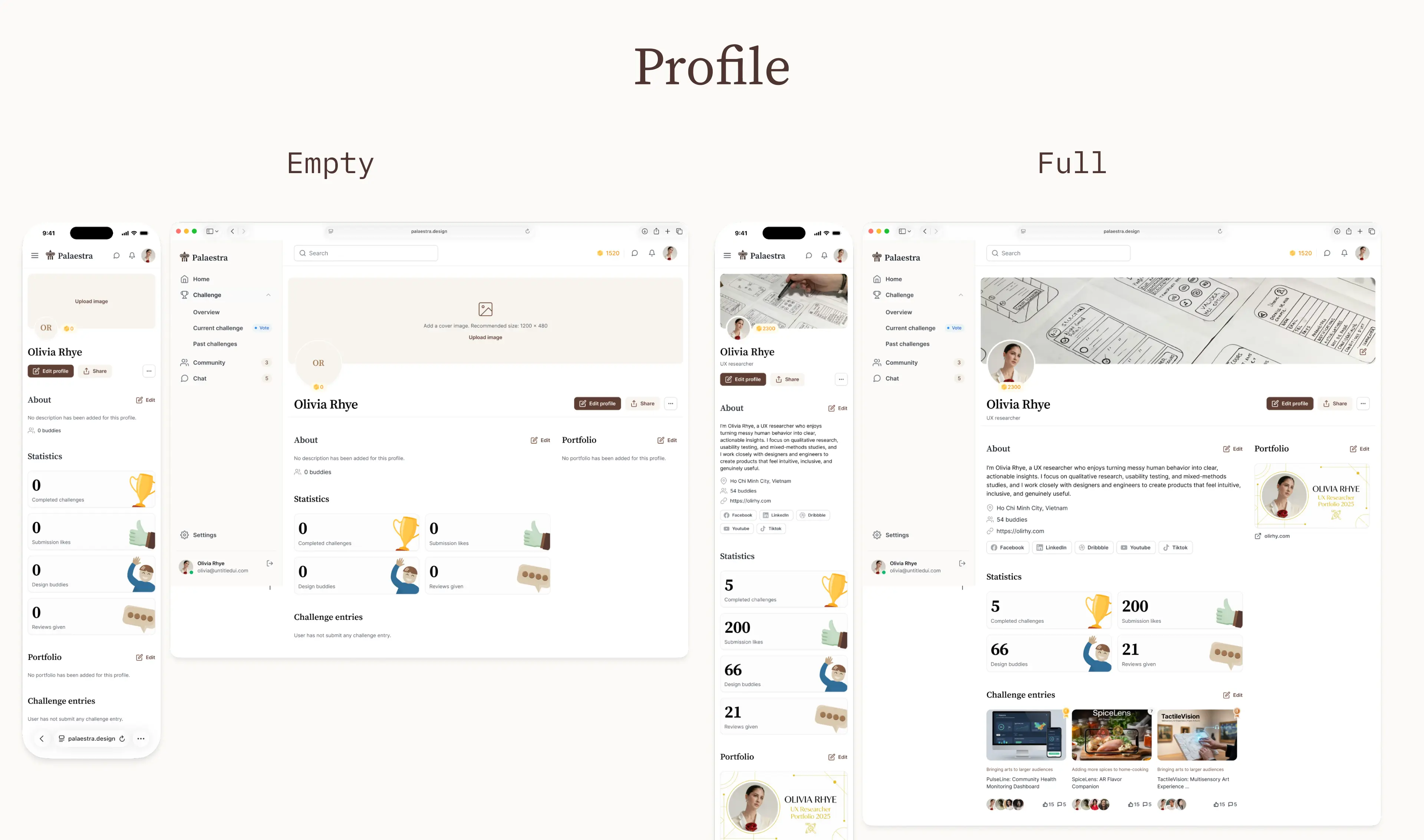
Profile
Data cases for empty vs fully completed profile.
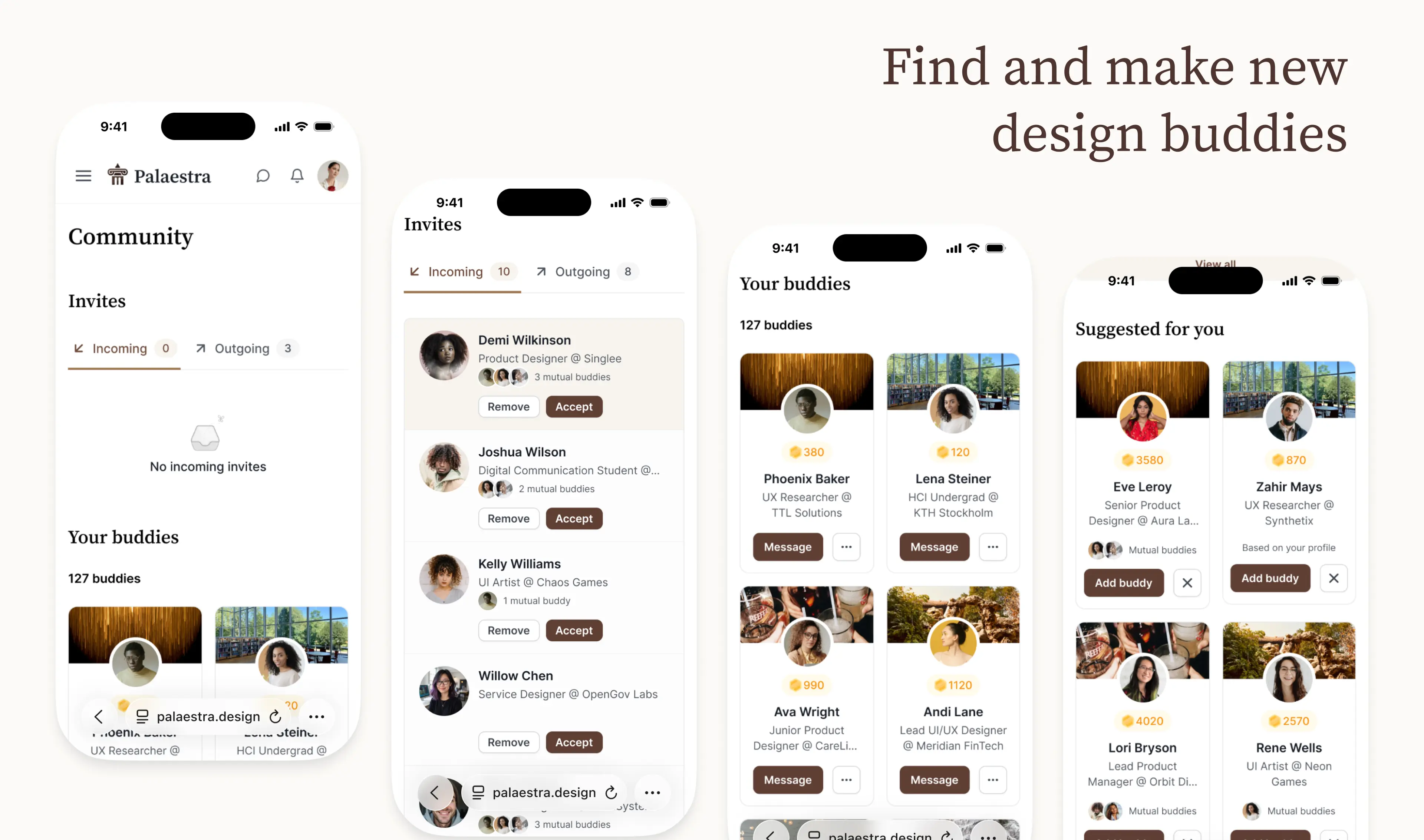
Community
Messaging
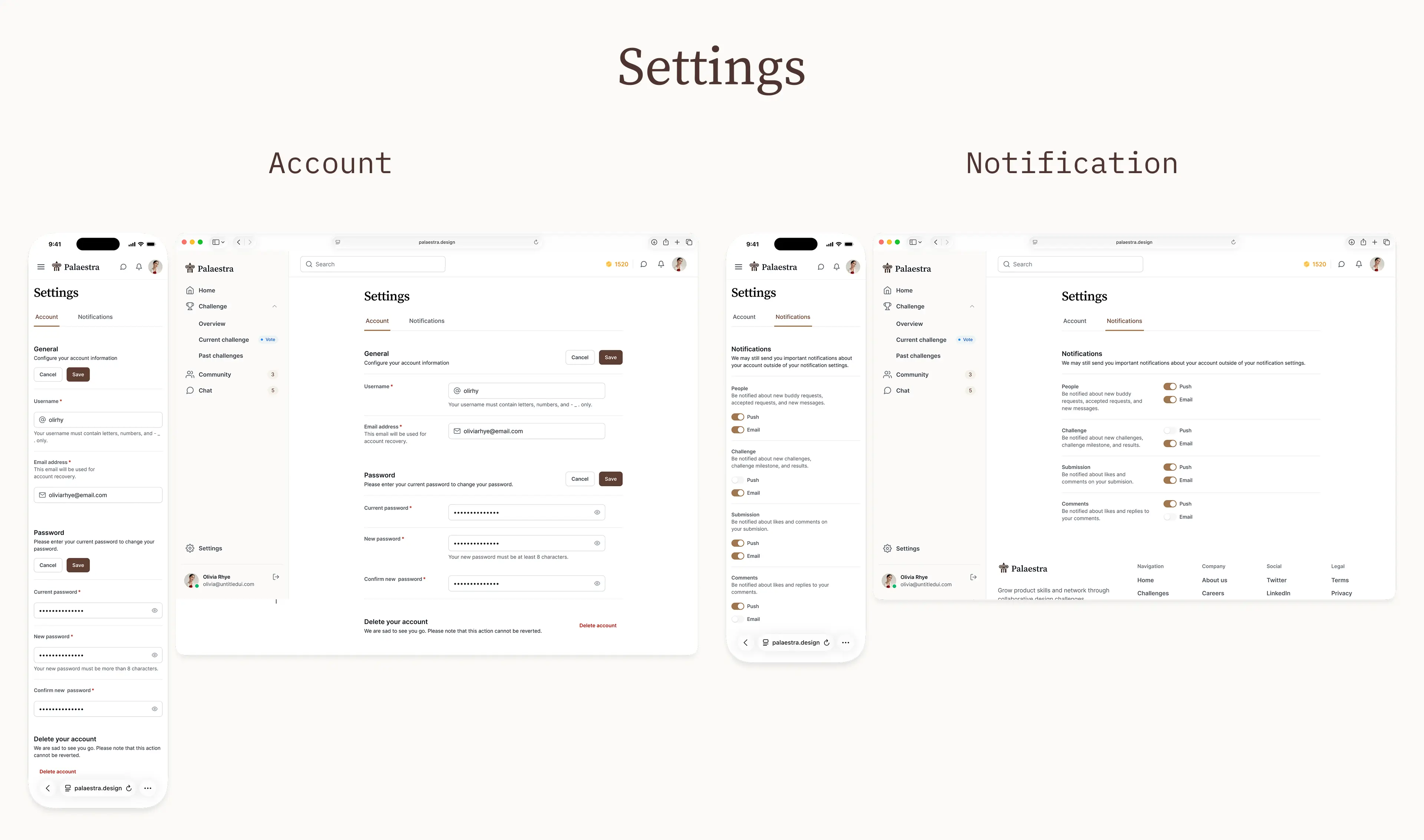
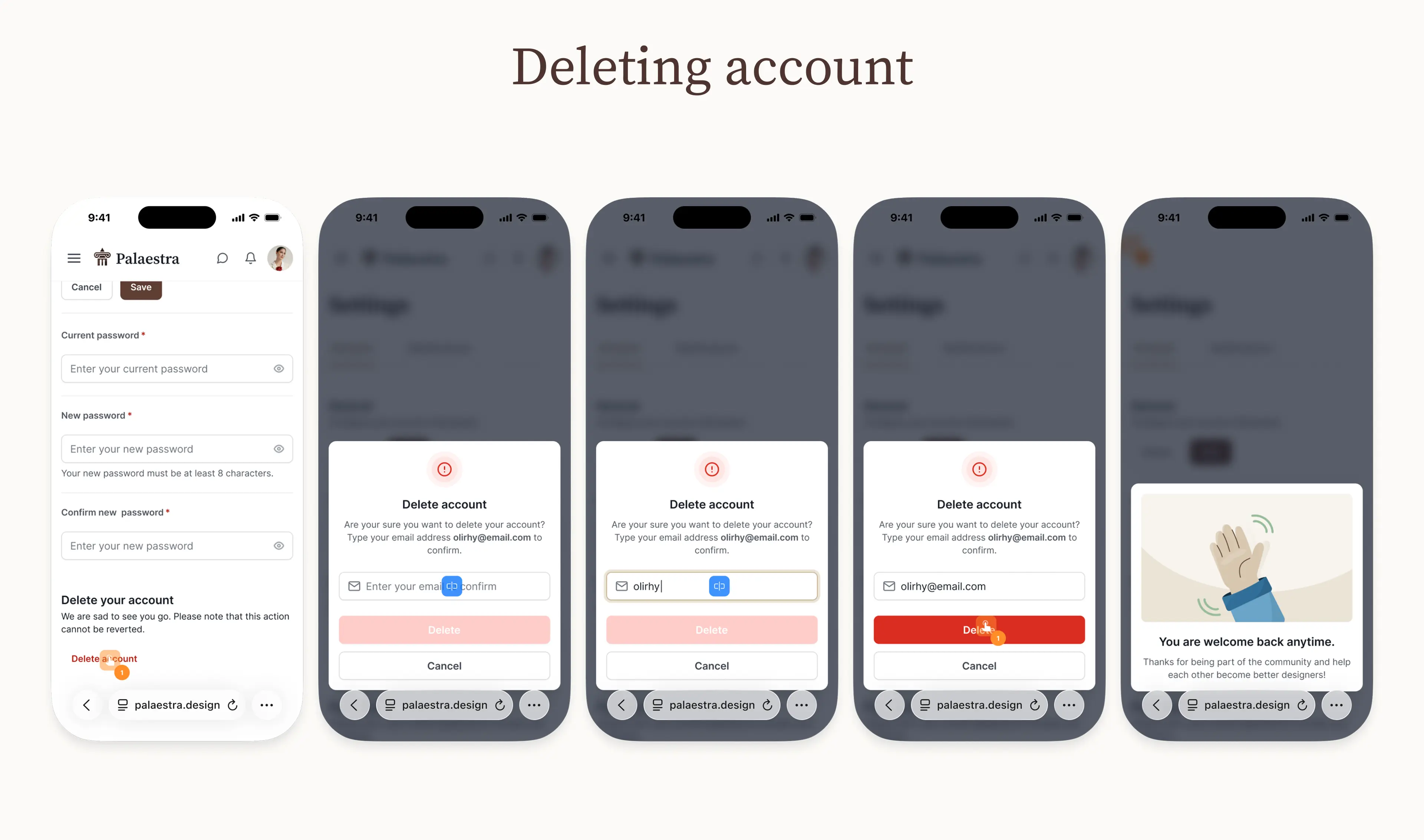
Settings
Sign up/sign in
Key learnings
- Research planning: how to answer research questions using multiple methods
- Transforming research insights to product concepts
- Design a complete product using a customized design system


